Yes, 70% humidity is too high for a house in winter. The EPA recommends keeping indoor relative humidity below 60%, ideally between 30% and 50%, and in Fort Worth the risk shows up when a cold front chills your windows and exterior walls. Mid-October is the time to put a hygrometer in the house and learn your numbers before the first freeze.
What is the best household humidity level to prevent mold?
Aim for 30% to 50% relative humidity. The EPA says that range, with a ceiling below 60%, helps control mold.
ASHRAE Standard 55 deals with thermal comfort, and its addendum d does not set a minimum humidity level. The 30% to 50% mold-control range comes from the EPA.
| Indoor relative humidity | What it means in winter |
|---|---|
| 30% to 50% | EPA's recommended range |
| 50% to 60% | Under the ceiling but above the ideal; watch cold surfaces |
| Above 60% | High humidity; likely to cause building condensation that can lead to mold |
| 70% | 10 points past the line; act now |
Why is 70% humidity a problem when a cold front arrives?
Condensation occurs when warm, humid indoor air contacts a cold surface. The colder the surface and the wetter the air, the sooner water droplets form.
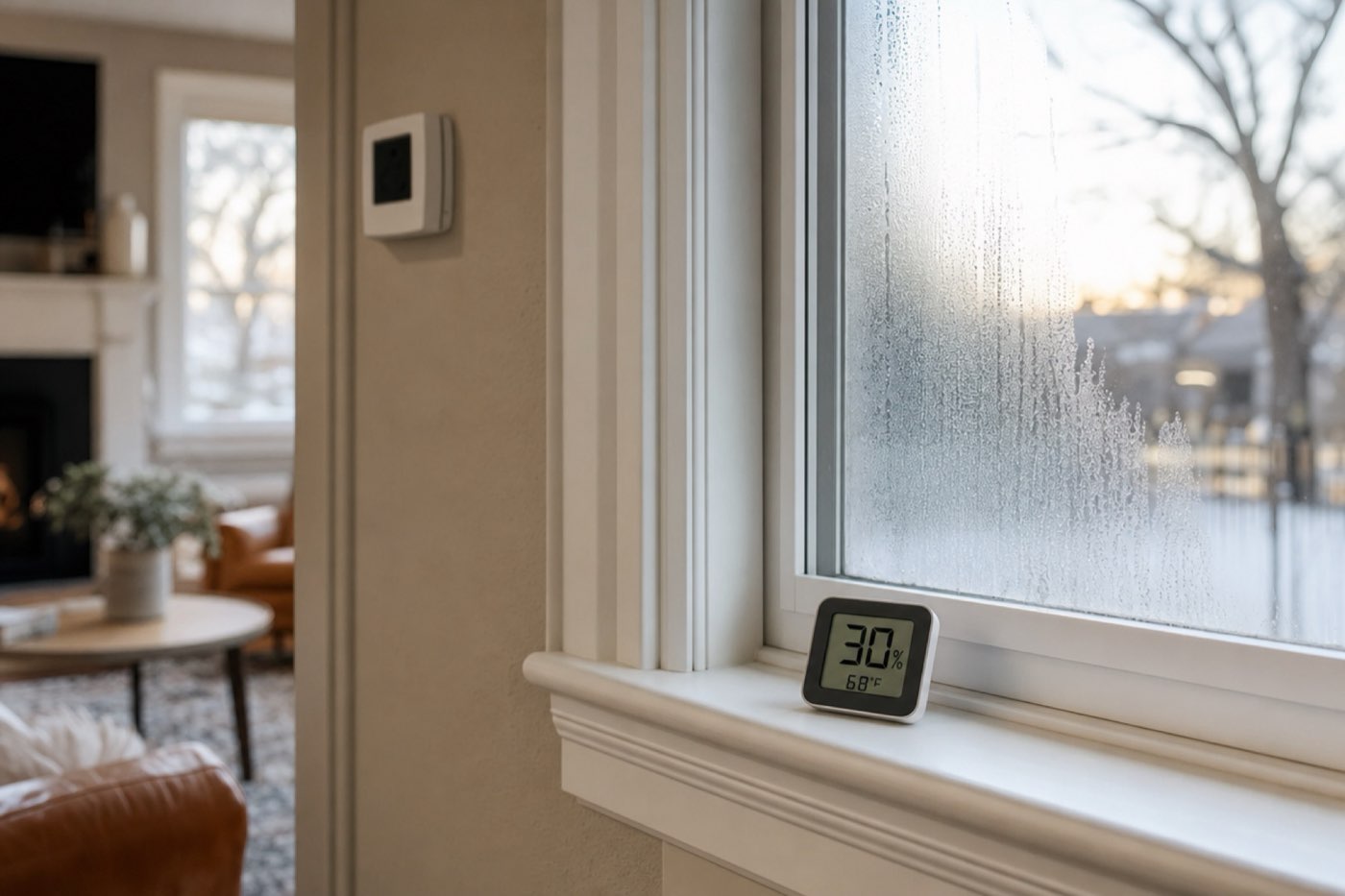
When a front drops Fort Worth temperatures below freezing, your window glass, window frames, and exterior wall surfaces cool far below the room air. Winter indoor water vapor can condense on cold windows, walls, and roof decks.
At 70% humidity, the air holds a lot of moisture, so even a modestly cold surface can collect water. At 35% to 45%, the same surface stays much drier.
Will 70% humidity cause window condensation, sill damage, and mold?
It raises the risk of all three, though the outcome depends on your house. Mold growth depends on how long a surface stays wet, how cold the surface is, what the material is, and what nutrients are on it.
The EPA states that relative humidity above 60% is likely to cause building condensation that can lead to mold growth. It also notes that mold can be found where condensation forms on cold surfaces.
Here is what that looks like in a typical house:
- Windows: fogging or beads of water on the glass, with water running onto the sill.
- Sills and frames: repeated wetting keeps wood damp, which is how mold and decay get started.
- Exterior walls and corners: cold wall surfaces behind furniture or closets collect moisture where air barely moves.
- Furnishings and clothing: the EPA says high room humidity can cause mold growth on indoor furnishings and clothing.
A 70% reading does not prove mold is already growing. It does mean conditions favor it, and the EPA lists condensation on cold surfaces and mold growth as signs of inadequate ventilation or excessive indoor moisture.
How do you monitor humidity with a digital hygrometer?
The EPA recommends using a household moisture or humidity gauge. A digital hygrometer that reads relative humidity is an inexpensive way to do that.
- Buy one or two in October. Put one in the main living area and one in a room that tends to feel damp or has cold exterior walls.
- Check it daily for the first two weeks of heating, then weekly. Note the reading on cold mornings and after showers or cooking.
- Compare to the targets: 30% to 50% is the goal, and anything near 60% needs action.
- Look at the glass. Condensation on windows, walls, or pipes calls for prompt drying and moisture reduction.
No brand is singled out as best. Choose a unit that clearly displays relative humidity, and use the same one in the same spot so your readings are comparable.
How do you lower humidity while running a gas furnace?
Work on the moisture sources and the cold surfaces together. The EPA recommends reducing humidity, increasing ventilation when outside air is cold and dry, and improving insulation or air circulation.
- Control moisture-generating activities. The EPA advises reducing indoor humidity to 30% to 60% and controlling moisture-generating activities. Showers, cooking, and drying laundry indoors are the usual ones.
- Ventilate on cold, dry days. Short periods of fresh air help when the outside air is cold and dry.
- Keep air moving. Do not block exterior walls with tight furniture, and keep closet doors cracked on outside walls.
- Dry condensation right away. Wipe the glass and sills each morning it appears.
- Add insulation where surfaces are cold. Insulation can reduce condensation on cold windows, piping, exterior walls, roofs, and floors.
If readings stay high even after these steps, or the furnace runs poorly, a licensed company can inspect your system. Our page on furnace repair in Fort Worth explains what to expect, and a fall visit for seasonal system maintenance is a good time to raise moisture concerns. For tips on picking a company, see how to choose an HVAC company.
Frequently asked questions
Will mold grow at 55% humidity?
It can, though risk is lower than at 70%. At 55% you are under the 60% ceiling but above the ideal 30% to 50% range, and mold can be found where condensation forms on cold surfaces. Lower the reading and keep windows and walls dry.
What kills mold from humidity?
Controlling moisture is the step the EPA backs: reduce humidity, dry wet surfaces promptly, and fix the source of the moisture. Visible growth means the moisture problem has been present, so a licensed HVAC company can help you find the cause.
What is the best indoor humidity gauge to check moisture levels?
Any digital hygrometer that shows relative humidity will do the job. The EPA recommends a household humidity gauge but does not name a model, so pick one with a clear display and read it at the same spot each day.
Why does my house feel so dry when the gas heater is running?
Warming air lowers its relative humidity if no moisture is added, so the same air reads drier at 70 degrees than at 50. Check your hygrometer; if it reads under 30%, you are below the recommended range.
If your readings are running high or your furnace is not keeping up, call (817) 420-7026 or send a service request. This is a free referral service that connects you with a licensed local heating and air company.