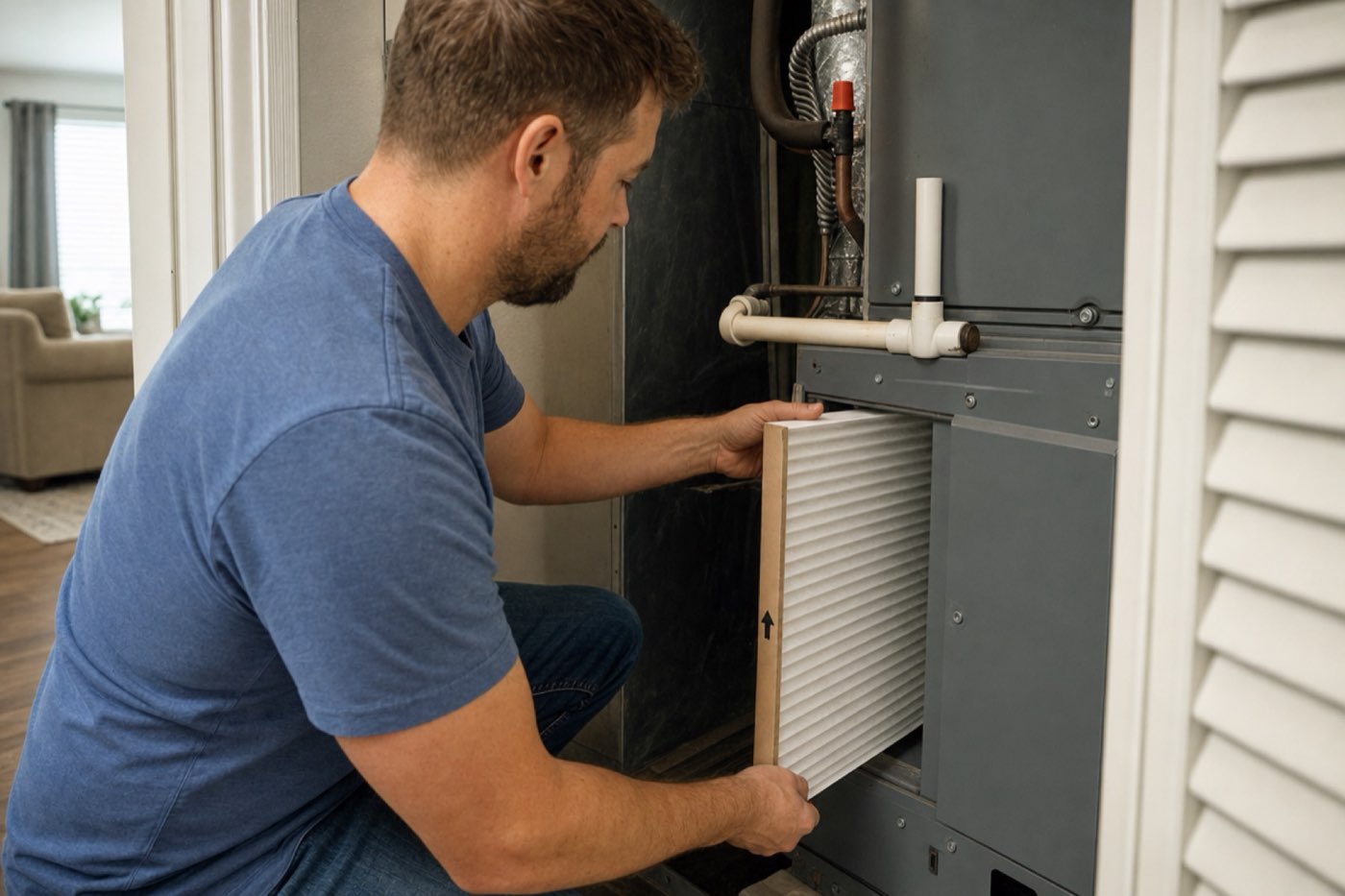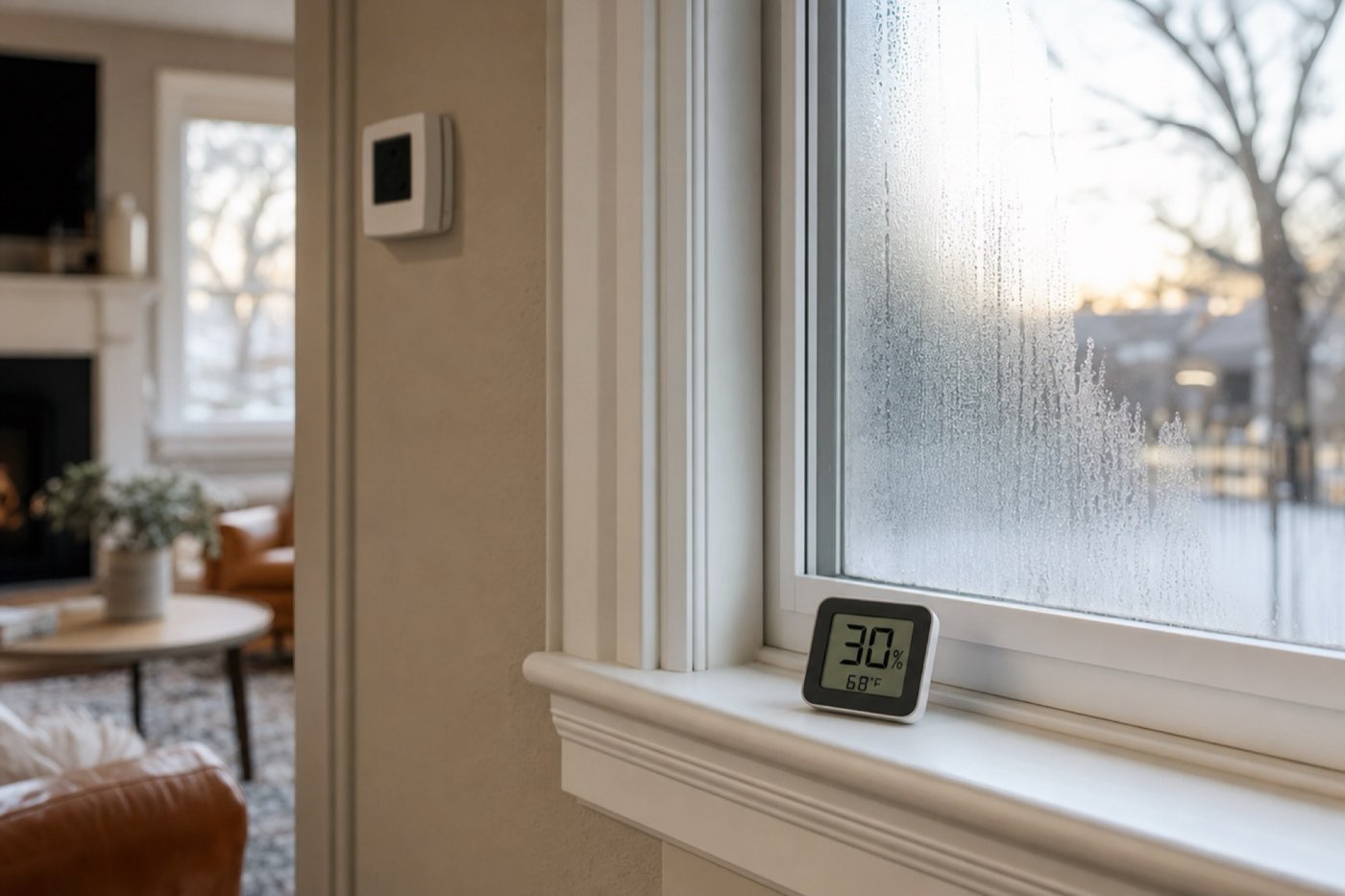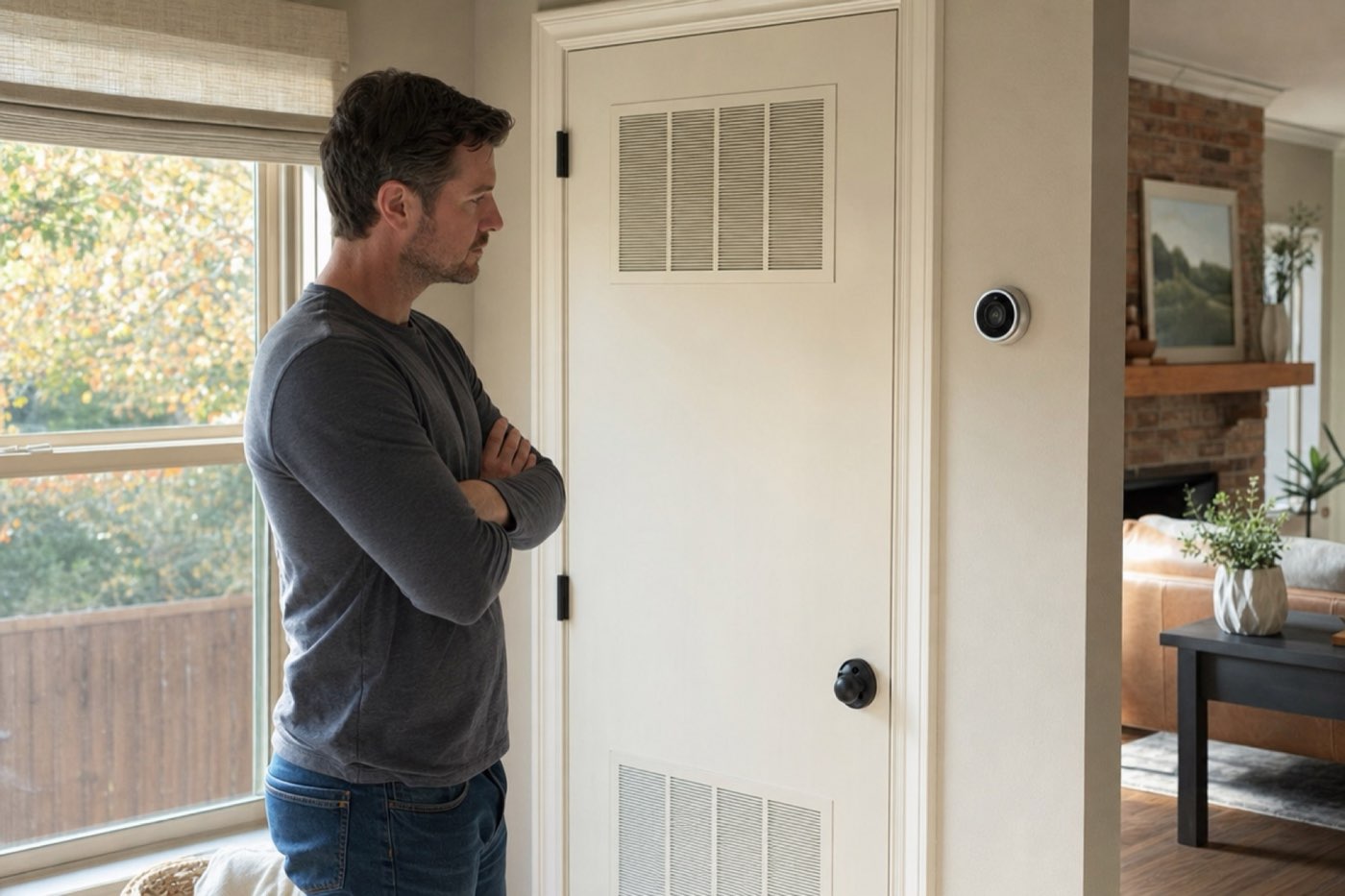
Plan to run your heat for the first time in late October or early November, with a short test run on the first cool nights around Halloween week. The National Weather Service lists Fort Worth's normal October high at 76.7°F and November's at 65.3°F, so most homes need little heat until November. Before that first run, confirm you have working carbon monoxide detectors if your system burns fuel.
When does Fort Worth normally need heat?
Most Fort Worth homes need only occasional heat in October and regular heat starting in November. That timing is a practical rule of thumb drawn from local monthly normals, not a fixed calendar date.
The National Weather Service's annual normals show 3 heating degree days in October and 69 in November, which points to heating demand rising substantially in November. The same normals show 285 in December.
| Month | Normal high | Normal heating degree days |
|---|---|---|
| October | 76.7°F | 3 |
| November | 65.3°F | 69 |
| December | 56.7°F | 285 |
December's heating demand is more than four times November's. Any problem with your heating system is far easier to deal with before then.
Should I run the heat during Halloween week?
Yes, but as a test, not a season-long switch. With a normal October high of 76.7°F, daytime hours are still mild, and the first cool evenings are the right moment for a trial.
Switch your thermostat to heat on one of those evenings and let the system complete a full cycle. Doing this before November's colder normals arrive gives you time to schedule a repair without waiting in line during a cold snap.
What should I check first before turning on the heat?
Check your carbon monoxide detectors first if you have a furnace, boiler, or any other fuel-burning heating appliance. The U.S. Department of Energy states that carbon monoxide is toxic, colorless, tasteless, and odorless. You cannot rely on your senses to warn you.
The same Department of Energy document says carbon-monoxide detectors are highly recommended in homes with fuel-burning appliances. Press the test button on each detector and confirm it sounds before the first heating cycle.
Where should carbon monoxide detectors go?
Put them in rooms directly connected to combustion appliances, including areas near combustion closets for fuel-burning heating systems. That is the Department of Energy's placement guidance.
If your furnace sits in a closet or alcove off a hallway, the area near that closet is a sensible spot to check. Detectors in sleeping areas are also worth a look, since many people run heat overnight.
How is a heating system's carbon monoxide level tested?
A professional measures it with instruments, and homeowners should not attempt this themselves. The Department of Energy says carbon-monoxide measurements should be made as part of the combustion-appliance installation process to verify operation and occupant safety.
The test follows a set procedure:
- The combustion-product CO reading is taken after the burner has operated continuously for five minutes.
- Levels greater than 100 ppm, measured on an air-free basis, indicate that adjustments are necessary.
- Levels below 10 ppm are usually achievable.
These numbers describe professional testing. They are not a homeowner test, and you should not try to match them with a consumer device.
Is my heating equipment installed correctly?
Combustion appliances should be installed according to manufacturer instructions and national and local code requirements, according to the Department of Energy. If your furnace was installed or replaced recently, that standard applies to the work.
If you are unsure how your system was installed, or you recently moved into the home, that is a good reason to have a licensed company look at it before the cold arrives. Our page on choosing an HVAC company in Fort Worth explains what to ask.
What if the heat doesn't start during my test?
Treat a failed test as a scheduling job for furnace repair, not an emergency, as long as you have no signs of a carbon monoxide problem. If a detector sounds, leave the house and call for help right away.
A test in late October leaves several weeks before November's heating demand of 69 degree days. It also leaves more than a month before December's 285.
Many homeowners bundle this with a seasonal checkup. Our overview of air conditioning and heating maintenance shows how a licensed company can handle both sides of the system.
What thermostat setting should I use?
Pick the setting that suits your household, because the right number depends on who lives there, how well the house is insulated, what type of equipment you have, and any health needs. A short test needs only a setting a few degrees above the current indoor temperature, enough to make the system start and run a full cycle.
After the test, you can switch back to cooling on warm afternoons. October's normal high of 76.7°F means many Fort Worth homes still use air conditioning in the daytime.
Your fall heating checklist
- Test every carbon monoxide detector, especially those near the furnace closet.
- Pick a cool evening around Halloween week and set the thermostat to heat.
- Let the system run through a complete cycle.
- If it fails to start or a detector sounds, stop and call a licensed professional.
- Plan on regular heating from November, when normals drop to a 65.3°F high.
If your test run turns up a problem, call (817) 420-7026 or send a service request to be connected with a licensed local heating and air company. Air Conditioning Repair Fort Worth is a free referral service, and the work itself is done by independent licensed companies.