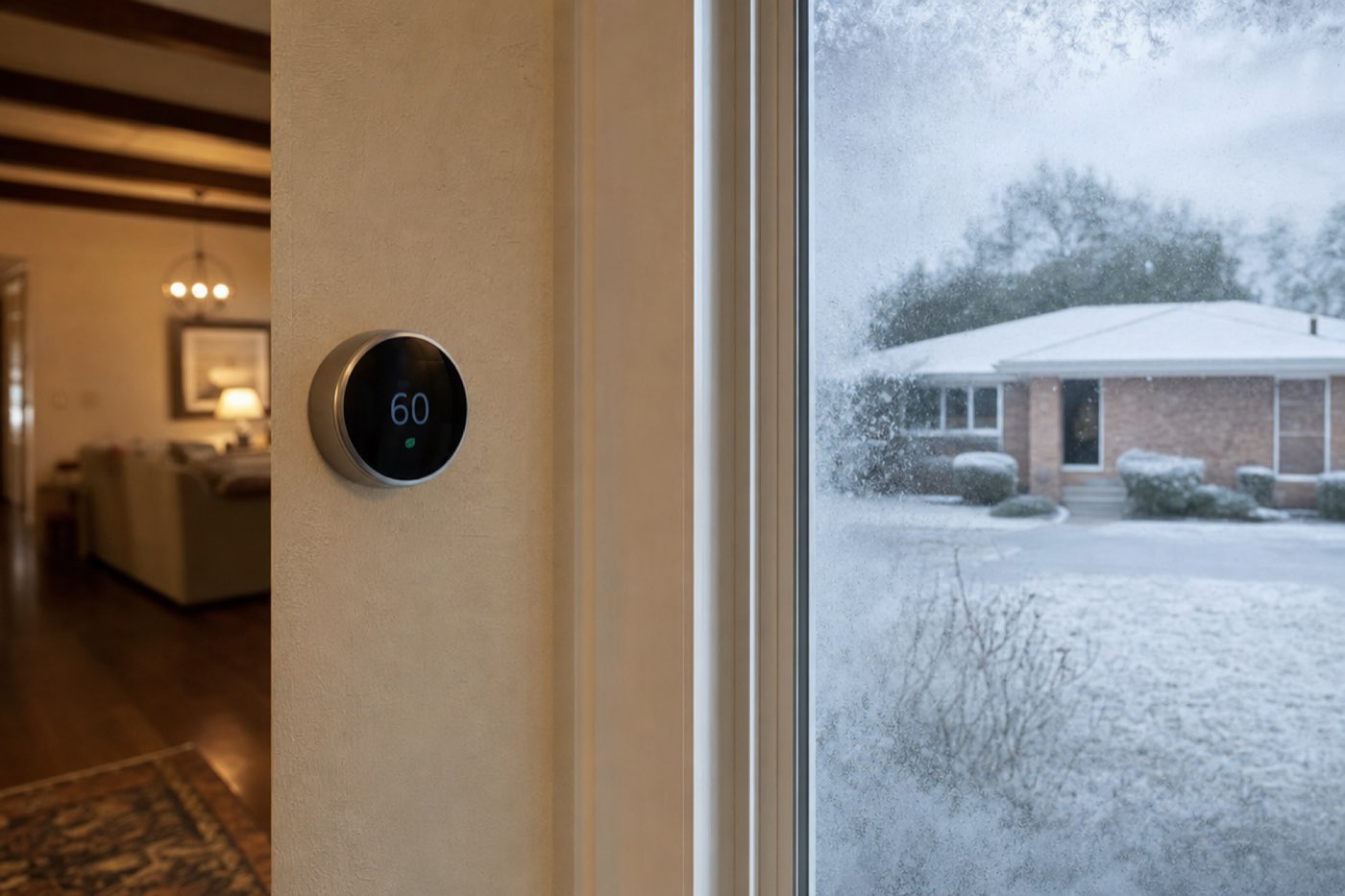
For a winter trip, set your thermostat no lower than 60°F in Fort Worth, and raise it if any plumbing runs through an unheated attic, exterior wall, garage or crawlspace. ERCOT has advised 55°F at night or when leaving for the day, and Atmos Energy recommends 58°F while you are away. Both are energy-saving settings, so 60°F gives you a margin that those numbers do not.
What do the energy guidelines say about your thermostat when you are away?
The published guidance sets 68°F as the standard setting while you are home and awake, then steps down when the house is empty or everyone is asleep. The table shows the numbers side by side.
| Source | Home and awake | Away or asleep |
|---|---|---|
| Atmos Energy | 68°F during the day | 58°F while away |
| ERCOT | 68°F or below during daytime conservation periods | 55°F at night or when leaving for the day |
| U.S. Department of Energy | 68°F is comfortable in newer, tighter homes | Set back several degrees during regular vacancy |
The Department of Energy also estimates that lowering the setting 7°F to 10°F for eight hours a day can save as much as 10 percent on heating. Its homeowner guide recommends a setback of several degrees whenever the house sits empty.
Is 60 degrees too low to prevent frozen pipes in Fort Worth?
For pipes inside heated rooms, 60°F is not too low. It sits above both the 55°F and 58°F away settings, so it protects better than either of them.
The risk is in the parts of the house your thermostat cannot feel. A thermostat reads the air in one hallway, while a pipe in an unheated attic, exterior wall, garage or crawlspace can sit in air that is much colder.
Whether a pipe freezes depends on several things:
- where the pipe runs and how well it is insulated
- how much outside air leaks into that space
- how evenly heat spreads through the house
- how long the freeze lasts and how hard the wind blows
- whether your heating system keeps running the whole time
That is why the 55°F figure is best read as an energy-saving setback, not a guarantee that every pipe in every house stays above freezing. If you know a supply line runs through an exposed space, set the thermostat higher than 60°F, such as 65°F, for the length of your trip.
What should you do before you leave?
Work through this list a few days before you travel, ahead of the Thanksgiving rush and the first Arctic front.
- Pick your away setting. Use 60°F as your floor, and go higher if your plumbing is exposed.
- Open cabinet doors. Atmos Energy says opening cabinet doors and leaving faucets at a trickle can help minimize the risk of frozen pipes. Do this under sinks on exterior walls first.
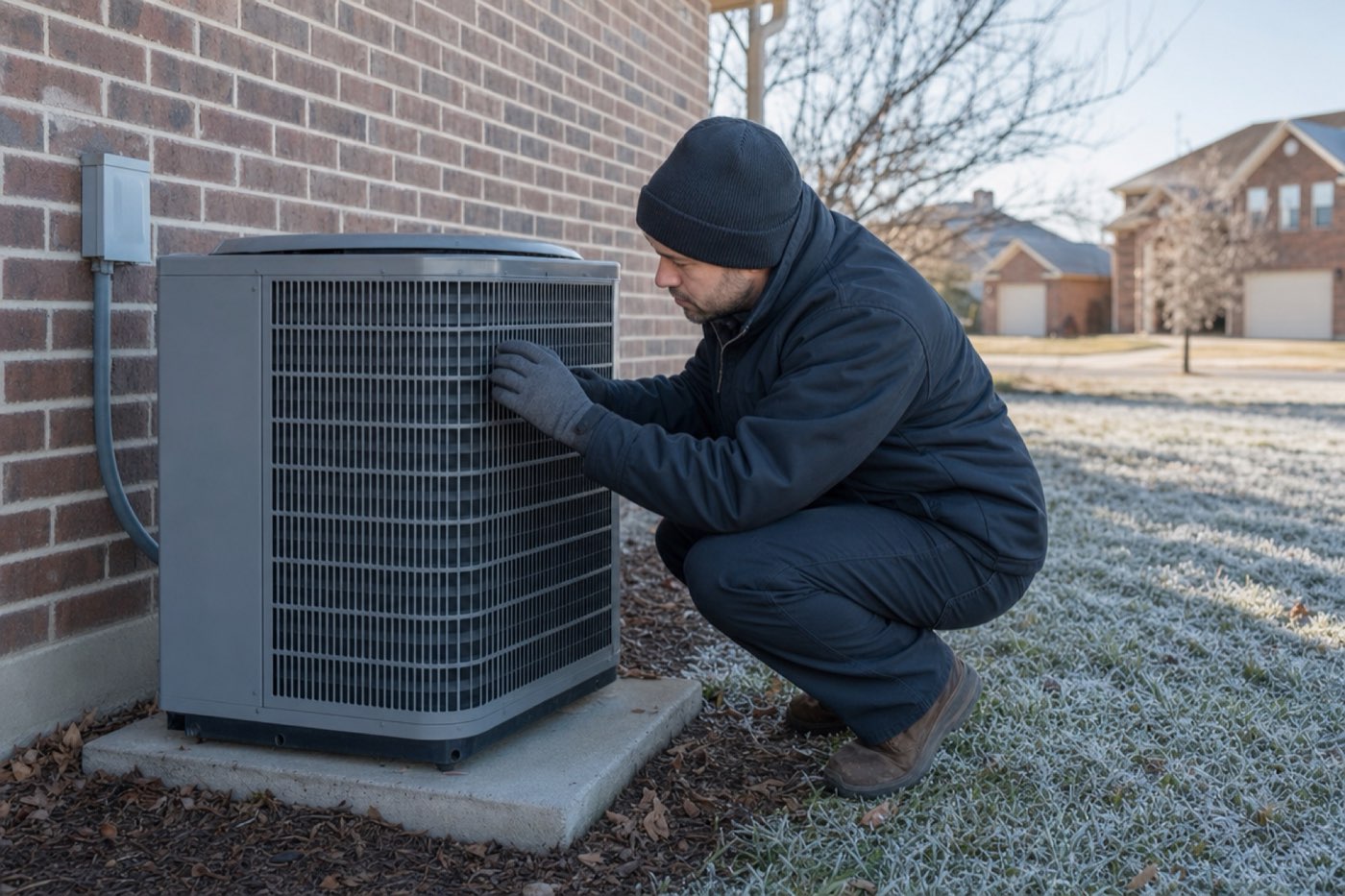
- Check your heat. Your setback only works if the furnace keeps running for the whole trip. If it short-cycles, rattles or fails to start, schedule furnace repair before you travel.
- Test the schedule. Run your thermostat at the away setting for a few hours before you leave and confirm the furnace is holding it.
- Line up a check-in. Ask a neighbor or family member to look in during a hard freeze.
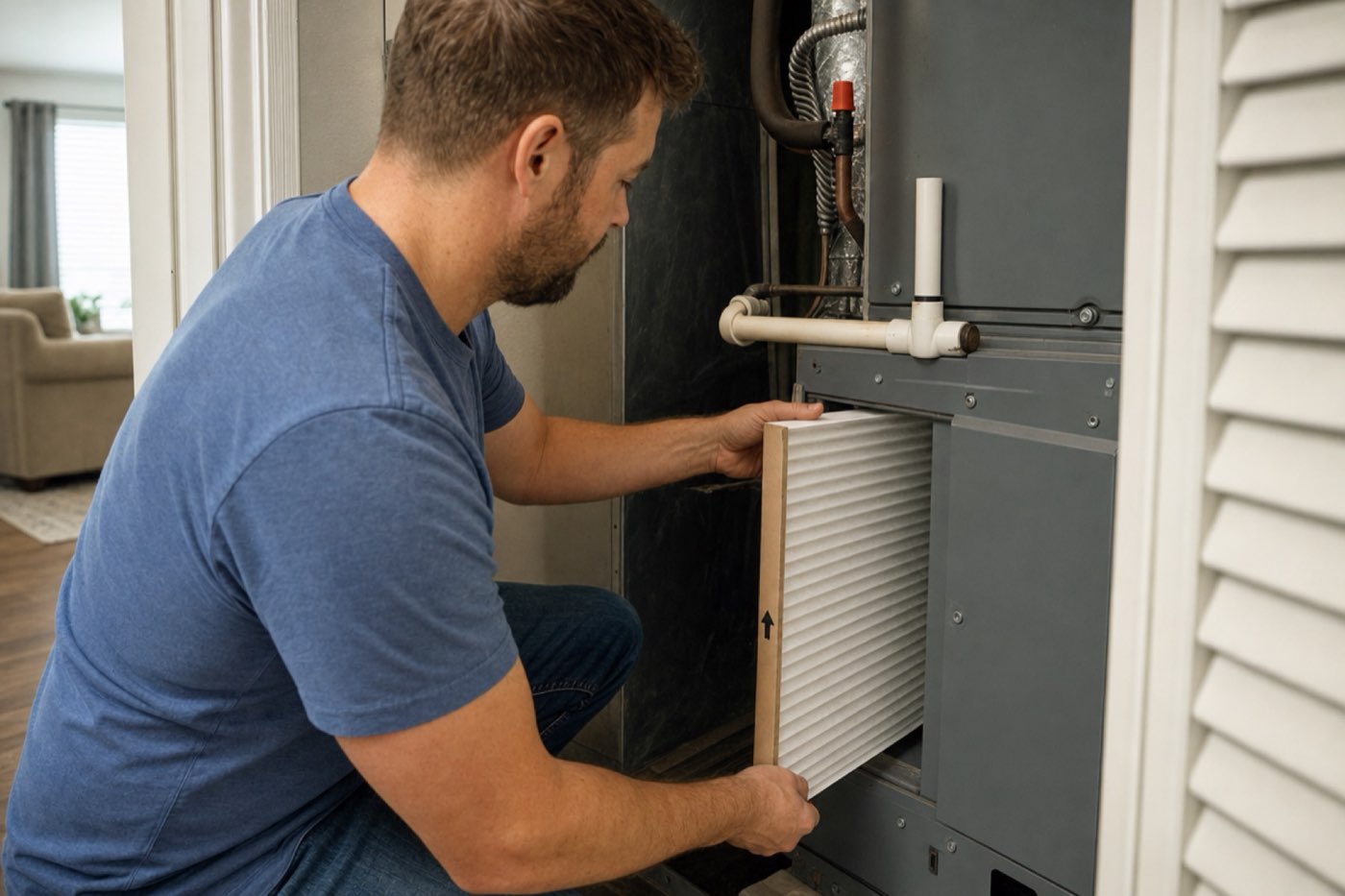
A yearly heating and cooling tune-up in the fall also helps catch a weak ignitor or a dirty filter before the cold arrives.
Should you hold one steady temperature or use a setback?
The guidance favors a setback during sleep or absence rather than holding your daytime setting around the clock. ERCOT's conservation advice lowers the thermostat at night or while you are out, and the Department of Energy points to programmable thermostats that adjust automatically while you are away or asleep.
Atmos Energy notes that every degree of thermostat adjustment affects energy use. For a trip, that means each degree you lower the setting trims the gas bill, up to the point where your pipes need the protection.
How do winter grid alerts change your setting?
During a winter conservation event, ERCOT's Texas Advisory and Notification System asks customers to lower thermostats by one or two degrees when it is safe to do so. In February 2021, the grid operator asked Texans to turn thermostats down to 68°F and said conservation should be done safely and within reason during prolonged below-freezing weather.
Those requests are about reducing demand on the grid. They are not a pipe-protection standard, and they do not replace keeping the vulnerable parts of your home warm enough. If you are home during an alert, lowering 70°F to 68°F is reasonable. If you are away and your plumbing is exposed, do not drop below your 60°F floor to chase a savings number.
When should you get help with your heating system?
Call before you leave if your furnace has been noisy, slow to start, or uneven in how it heats the house. A system that fails on day two of a trip is the main way a good thermostat plan goes wrong. If you are comparing companies, see how to choose an HVAC company in Fort Worth for what to ask.
Rules and utility guidance can change, so check current notices from ERCOT and your gas provider as of November 2026 before a major cold snap.
Want a licensed local heating and air company to check your furnace before you travel? Call (817) 420-7026 or send a service request. This is a free referral service, and we connect you with independent licensed companies.